Season 1 · Episode 4 · Manipur · Northeast India
Hingchabi
— She Wears Your Mother's Face
Also written Hingsabi, Hingchabee
In the jungles of Manipur there lives a witch who can become your mother. Her children walk among us. And the only way to kill her is hanging on her wall.

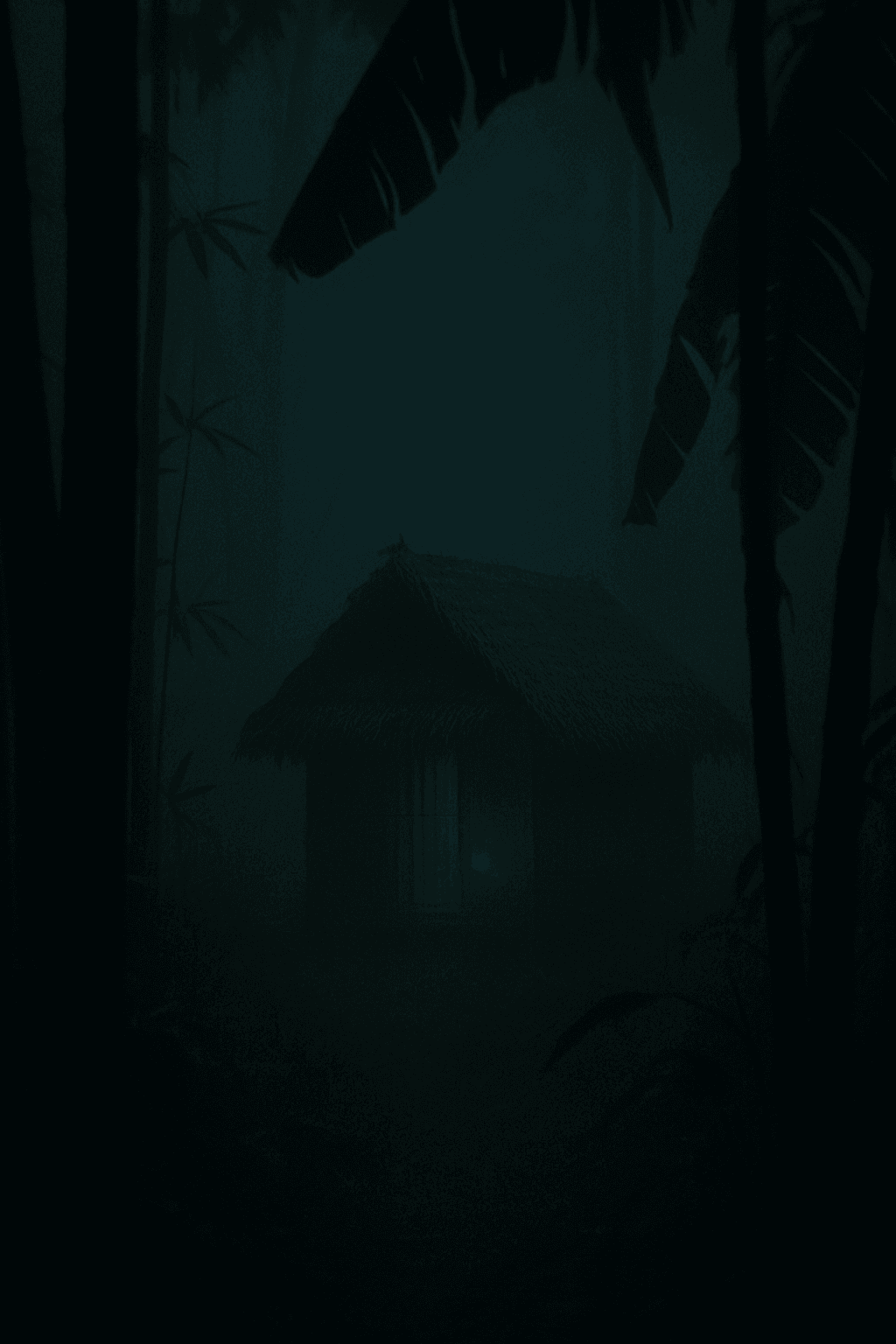
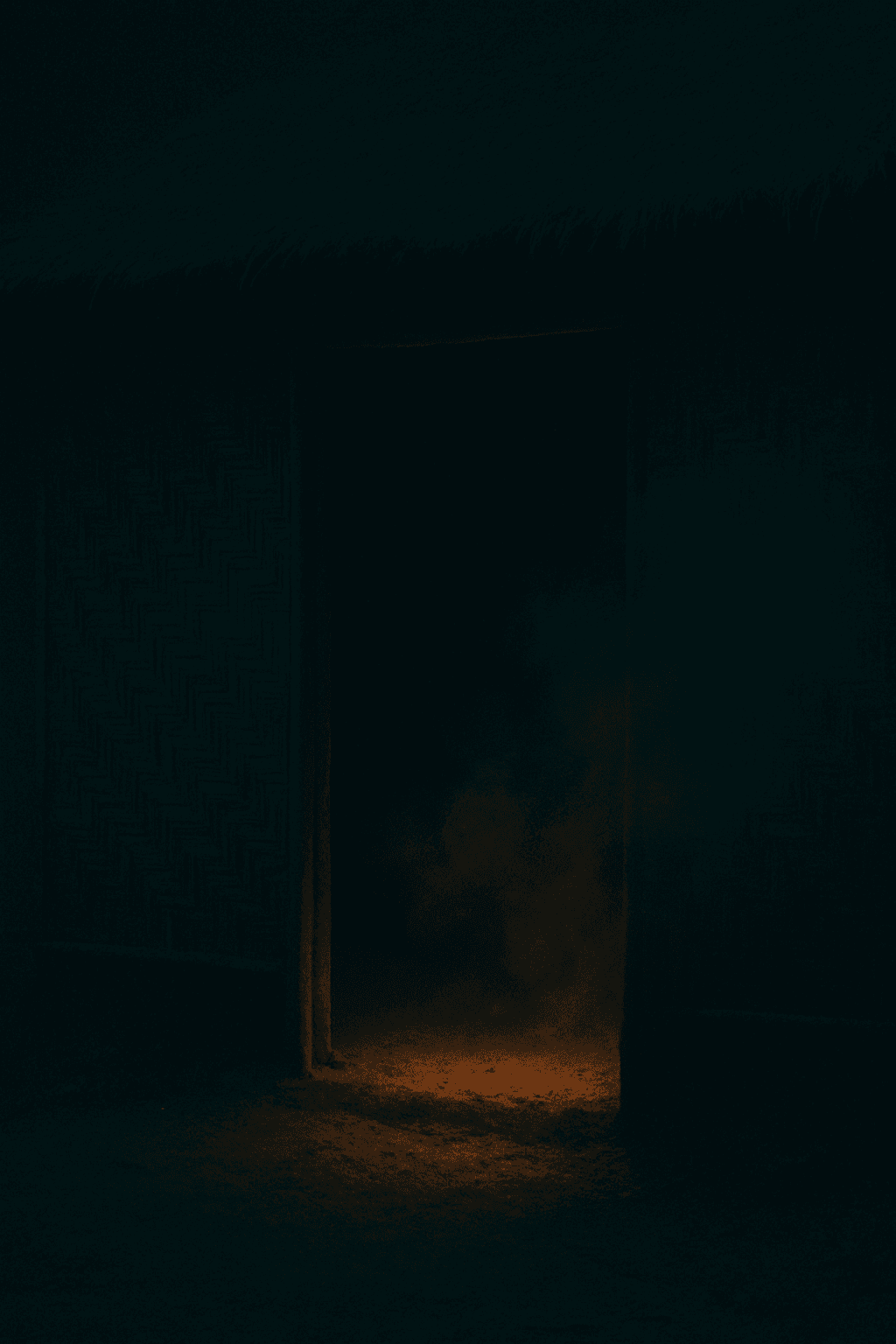
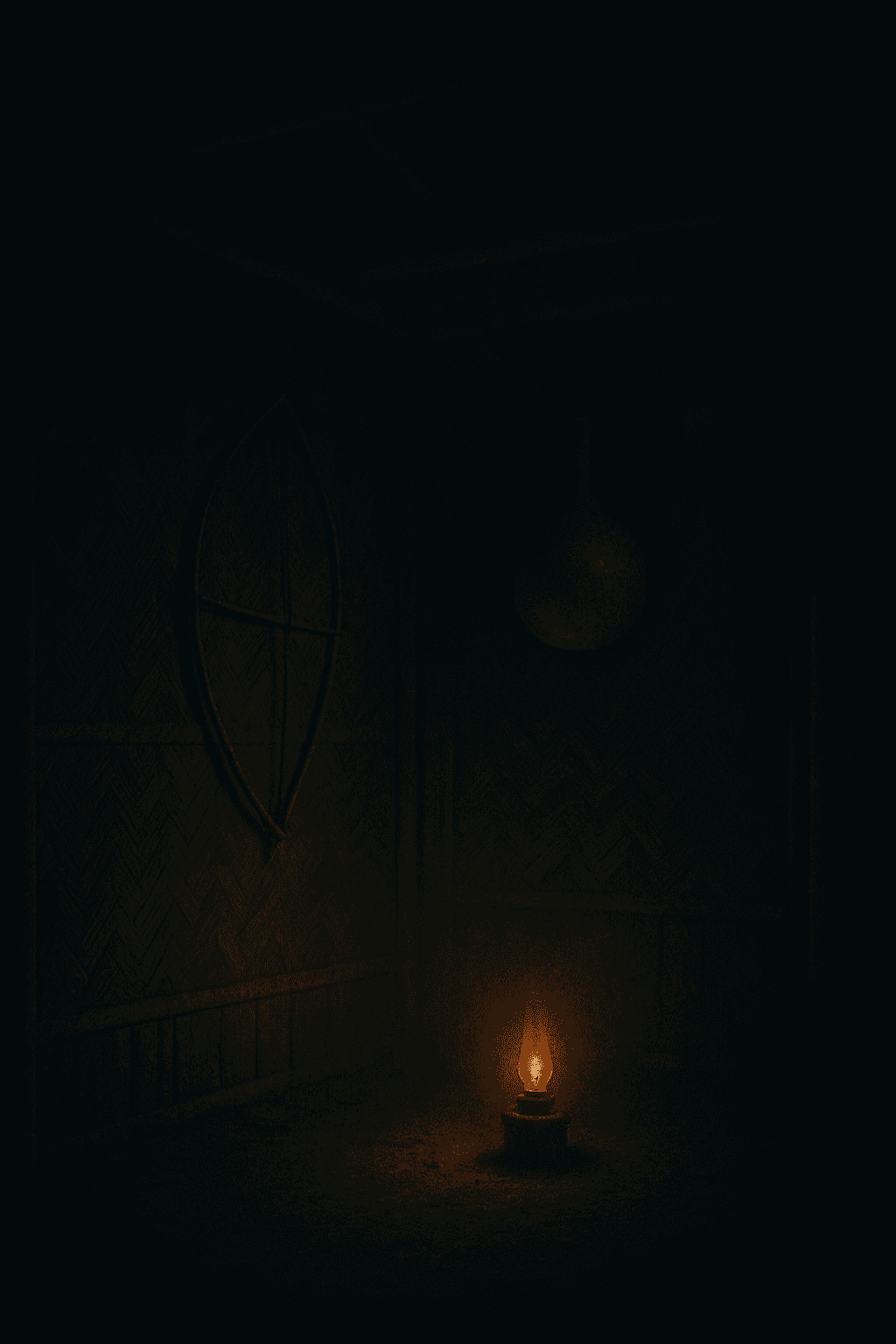
The bow is her spine. The gourd is her skull.
The Folklore
In Manipuri folklore the Hingchabi is a witch who eats children. She lives alone, in a hut set deep enough into the jungle that nobody passes it by accident.
She does not hunt alone. Her own children live in the village, among everyone else — known, trusted, unremarkable — and spend their ordinary lives stealing other people's children and carrying them home to their mother.
She can fly, rising above the treetops to see an enemy coming or to find a child left alone. When she finds one she does not chase. She becomes that child's mother, her look and her voice, and calls softly until it follows.
She can also leave her body and enter someone else's, usually a grown woman. You can tell: the possessed hide in dark corners, muttering in a language nobody in the room understands.
Even a Hingchabi whose hut is found is rarely in danger, because she gardens. Three plants, each a weapon that costs her one leaf — pluck it, drop it, and the ground answers.
How You Survive It
On the wall of every Hingchabi's hut hangs a bamboo bow and a large hollow gourd. They are not decoration. The bow is her spine, the gourd is her skull. Snap the bow and her back shatters; break the gourd and her head is crushed. To kill a Hingchabi you never have to face her — you have to find her house.
What Didn't Fit in 90 Seconds
There is a male version nobody talks about
Hingchabi is specifically female. The male form, Hingchaba, is attested but rarely told. Almost every surviving story is about her.
The three plants have names
The episode calls them first, second and third. In the source: isingchaopbi manaa turns to floodwater, kaakpheichaobi manaa summons leeches, meichaobi sets the forest alight. One leaf each.
The exorcism is a negotiation
She is not driven out by force but coaxed — offered a beedi to smoke, chicken to eat, or betel-nut to chew, and invited to leave in exchange. Bargained with, like a guest who has overstayed.
Her defences are why the weakness matters
Flood, leeches and fire mean a Hingchabi whose hut is found escapes anyway. That is why the bow and the gourd are the answer — confrontation was never a plan that works.
What We Changed
No powers, weaknesses or events were added. Only the order changed: the source introduces her plants before her shape-shifting, while the episode leads with the mother's face, because that is the image the story lives or dies on. The plant names were cut for time and are restored above.
Source
- Ghosts, Monsters, and Demons of India, Chapter 110
How It Was Made
- Generate the portrait first, then use it as reference for the full body. That is what holds the face across every later clip.
- For an alternate form, never feed the original form in as reference — it bleeds through and you get a hybrid instead of a transformation.
- Transformations work as two images, before and after. One image trying to catch the middle never lands.